QLED TV Technology Explained: Specs, Comparisons Guide
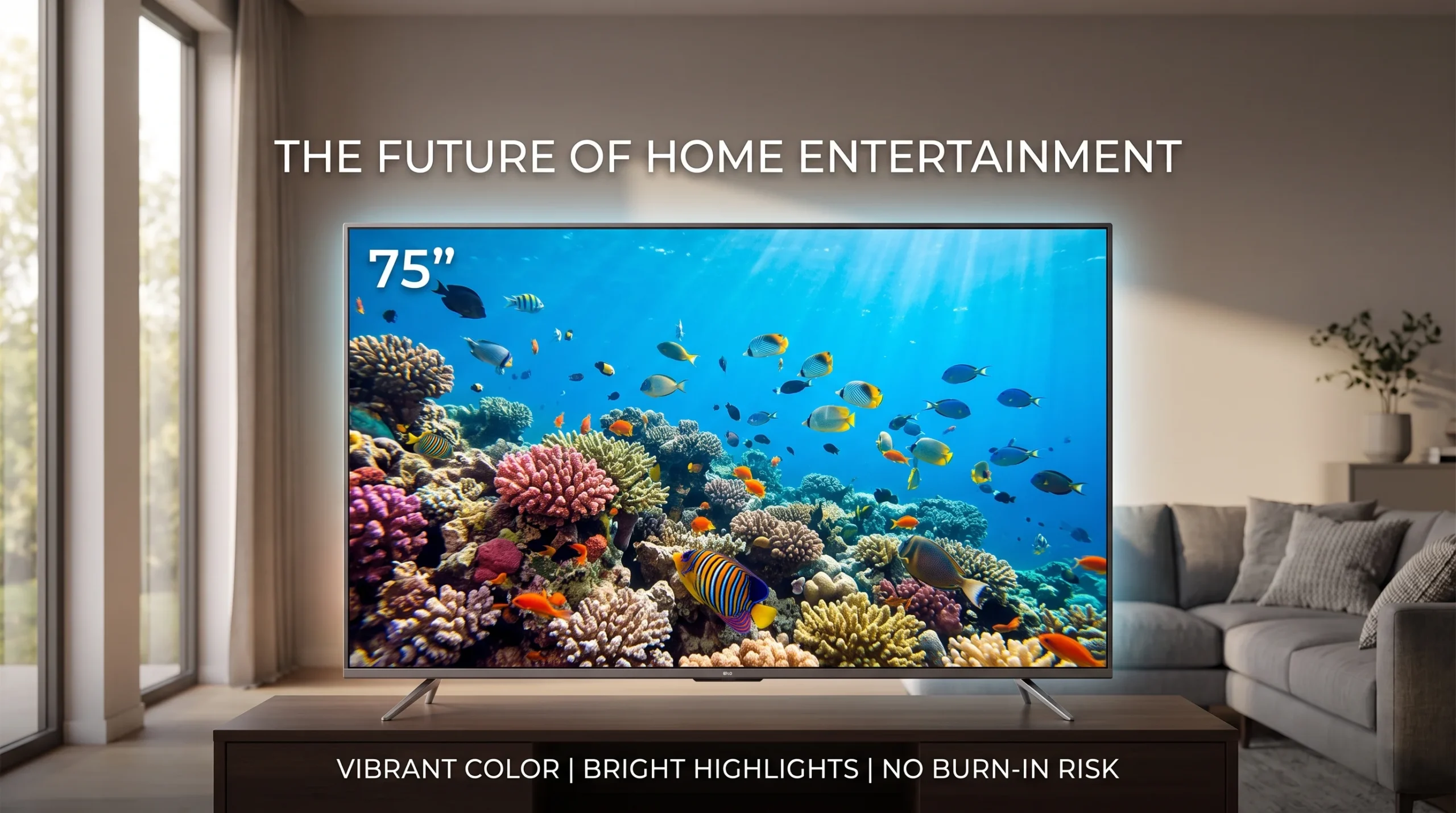
Walking down a home theater aisle or scrolling through retail listings can leave anyone drowning in screen acronyms. Between refresh rates, HDR standards, and panel tags, sorting marketing buzzwords from genuine display innovations feels like a chore. At the center of this conversation sits one term you will see slapped across thousands of television boxes: qled.
While brand promotional material makes it sound like an entirely separate species of television, the reality is far more grounded, practical, and interesting.
Below is your clear, complete roadmap to understanding quantum dot displays, evaluating how they stack up against rival panels in real homes, and determining whether this hardware deserves a spot on your media console.
Quick Answer: What Does QLED Stand For and How Does It Work?
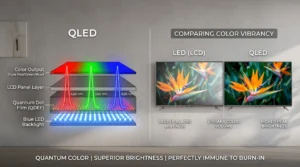
A qled television stands for Quantum Dot Light-Emitting Diode. Stripped of brand marketing, it is an advanced liquid crystal display (LCD) that places a layer of microscopic semiconductor nanocrystals, called quantum dots, between a traditional LED backlight and the display surface.
When blue light from the internal backlight strikes this microscopic film, the dots fluoresce to produce exceptionally pure, hyper-saturated red and green light. These pure primary shades blend to create a brilliant white light profile before filtering through the liquid crystal layer, giving viewers significantly brighter highlights and richer, more true-to-life colors than legacy LED panels could ever manage.
The Display Sandwich: Transmissive vs. Emissive Technology
To understand why this design behaves the way it does, you have to appreciate the distinction between emissive and transmissive displays.
A standard quantum dot display remains strictly transmissive. That means the pixels themselves cannot produce independent light. They rely on an external light source, an LED backlight, shining through multiple internal layers:
-
A reflective backplate
-
The primary LED backlight matrix
-
A light guide plate and diffusers
-
The quantum dot enhancement film (often called QDEF)
-
The liquid crystal panel layer that opens and closes pixel shutters
-
The external front polarizing filter
Because transmissive displays depend on passing light through these stacked sheets, they excel at delivering sheer brightness. However, because the backlight stays illuminated behind dark scenes, blocking that brilliance completely requires aggressive engineering.
Common Misconceptions: What qled Is and What It Is Not
Before weighing performance trade-offs, clearing up a few persistent retail myths will save you hours of confusion.
Panel Technology vs. Screen Resolution: Clarifying 4K
One of the most widespread retail mix-ups centers on display construction versus pixel count. Shoppers frequently ask whether a quantum dot screen is better than a 4K television.
The two terms describe entirely unrelated aspects of your TV. Resolution refers strictly to pixel density: a 4K screen packs roughly 8.3 million individual pixels across a 3840 x 2160 grid, regardless of what illuminates them.
The quantum dot label describes the optical filter and backlight mechanism used to produce light and color. Almost every modern quantum dot screen sold today features a 4K native resolution, with top-tier premium models pushing into 8K territory. They are complementary features, never mutually exclusive alternatives.
Avoiding Confusion: Standard Panels vs. Modern Variants
Display naming conventions do not make shopping easy. You will encounter several terms that sound identical but perform quite differently:
-
Standard Quantum Dot LED: Uses a standard array of LED bulbs paired with a color-enhancing nanocrystal film.
-
Mini-LED Displays (Such as Neo QLED): Replaces chunky traditional backlight LEDs with thousands of microscopic diodes grouped into hundreds or thousands of individually controlled dimming zones.
-
Qled-OLED: An entirely separate, premium hybrid panel that uses blue organic self-emissive diodes to excite printed quantum dots, merging per-pixel black levels with intense quantum color reproduction.
-
Electroluminescent Direct-View Quantum Dots: The hypothetical true emissive panel where nanocrystals produce their own light without backlights. Prototypes exist in research labs, but mass-market commercial availability remains years away.
Technical Performance Breakdown: Benchmarks and Laboratory Metrics
When you push past spec sheets and evaluate displays in real viewing conditions, four critical performance metrics separate elite screens from budget performers.
Peak Luminance and Room Reflection Handling
Where a quantum dot display truly flexes its muscles is pure light output. Because manufacturers can drive modern LED diodes with substantial electrical power, high-grade panels can easily sustain between 1,500 and 2,500 nits of peak luminance across standard HDR presentation windows.
This immense light output matters directly if your television sits in a room with tall windows, white walls, or abundant ambient daylight. When coupled with advanced matte or glossy anti-reflective coatings, these displays cut through severe daytime glare with ease, keeping reflections from washing out darker drama scenes or midday sports broadcasts.
Contrast, Black Levels, and the Blooming Phenomenon
While peak brightness remains a massive victory, native contrast is where transmissive designs face physical hurdles.
Because an underlying backlight remains powered on, standard panels can let stray illumination seep past the liquid crystal shutters. To counter this, quality televisions incorporate Full-Array Local Dimming (FALD). By dividing the backlight into isolated zones, the TV can extinguish light behind deep night skies while keeping bright street lamps dazzling.
However, when a brilliant object, like white movie subtitles or a bright moon, appears on a pitch-black background, light can spill into adjacent inactive zones. This optical halo is known as blooming. While elite models with thousands of Mini-LED zones control blooming impressively well, budget implementations with low zone counts can show noticeable light bleeding.
Color Gamut Coverage and Spectral Volume
Nanocrystals excel at spectral efficiency. Traditional white-phosphor LEDs emit a muddy, wide spectrum that requires aggressive filtering, which wastes energy and weakens color vibrancy.
Quantum dots, by contrast, emit razor-sharp, narrow spectral peaks at precise nanometer wavelengths. This precision allows compatible panels to reproduce over 95 percent of the demanding DCI-P3 cinema color space and cover vast swathes of the wider Rec. 2020 color volume. Even at blindingly high nit levels, colors remain deep, rich, and saturated rather than turning pale or washed out.
Viewing Angle Degradation
Most non-emissive displays utilize Vertical Alignment (VA) liquid crystal panels to maximize static native contrast ratios. The trade-off is optical directional bias.
When you sit squarely in front of the screen, the image appears punchy, deep, and dynamic. Move past 30 degrees to the side, however, and light begins leaking past adjacent subpixel barriers. Contrast plunges, blacks turn hazy gray, and vibrant reds shift toward pastel pink.
While manufacturers include wide-angle optical films on higher-tier models to mitigate this drop-off, homes with wide sectional sofas often notice picture degradation from off-axis seats.
Display Technology Comparison
To help you visualize how modern display types contrast with one another, here is a direct comparison across the critical buying variables:
| Performance Metric | Standard Quantum Dot LED | Mini-LED Enhanced | Organic Light-Emitting Diode (OLED) |
| Backlight Mechanism | Traditional Full-Array or Edge LEDs | Thousands of microscopic Mini-LEDs | None (Self-emissive pixels) |
| Peak Brightness | 800 to 1,500 Nits | 1,500 to 3,000+ Nits | 600 to 1,400 Nits |
| Black Levels | Moderate to Deep (Some light bleed) | Very Deep (Minimal blooming) | Perfect, absolute zero blacks |
| Contrast Ratio | High (5,000:1 to 8,000:1 native) | Extremely High with local dimming | Infinite (Per-pixel off) |
| Off-Axis Viewing | Noticeable color fading past 30° | Moderate color retention | Perfect fidelity at extreme angles |
| Burn-in Vulnerability | Completely immune | Completely immune | Low risk, but physically possible |
| Pricing at 75″+ Sizes | Highly competitive and accessible | Mid to premium pricing tier | Substantially more expensive |
The Untapped Buying Factors for qled
Beyond basic contrast numbers, several practical ownership elements rarely get discussed in showroom reviews yet dictate everyday enjoyment.
The HDR Format Ecosystem Divide
When you shop for a modern display, pay close attention to high dynamic range format licensing. Samsung, the primary manufacturer advancing quantum dot hardware, champions the HDR10+ dynamic metadata format while steadfastly refusing to support Dolby Vision across its lineup.
Dolby Vision remains the dominant mastering standard on popular streaming apps like Netflix, Disney+, and Apple TV. While a television lacking Dolby Vision will simply fall back to playing standard baseline HDR10, you lose frame-by-frame scene adjustments mastered by studio colorists.
Thankfully, the monumental peak luminance of these sets often compensates by muscle: their intense hardware brightness handles tone mapping effortlessly, but cinema purists seeking exact metadata matching must weigh this ecosystem limitation carefully.
Energy Draw and Long-Term Thermal Demands
Brilliance requires electrical wattage. Driving hundreds of LED clusters to output 2,000 nits produces tangible heat and draws measurable power.
Under sustained high-brightness HDR playback, an aggressive full-array panel draws noticeably more wattage than a self-emissive display showcasing average-luminance movie scenes.
Furthermore, prolonged heat inside a television chassis places thermal stress on internal power supply units and timing control (T-Con) boards over time. Choosing a display with well-engineered rear chassis venting ensures that intense light cycles do not shorten the lifespan of internal driving circuits.
Acoustic Limitations of Ultra-Thin Casings
Modern televisions prioritize razor-thin silhouettes designed to hang flush against your wall like a framed painting. Unfortunately, physics cannot be cheated when it comes to moving air.
Shaving cabinet depth down to a fraction of an inch leaves zero physical enclosure volume for dedicated speaker cones. Most sets rely on small down-firing or rear-firing drivers bouncing tinny sound off your drywall, resulting in dialogue that gets buried under boomy action mixes.
If you invest in a vibrant, large-format panel, budgeting for a quality eARC soundbar or a dedicated audio-video receiver is practically mandatory for an immersive experience.
Gaming Capabilities of qled
For dedicated console and PC gamers, these displays provide an exceptionally potent, worry-free canvas.
Modern sets universally support HDMI 2.1 bandwidth across multiple ports, unlocking:
-
Native 4K gaming at fluid 120Hz or 144Hz refresh rates
-
Variable Refresh Rate (VRR) through HDMI Forum specifications
-
AMD FreeSync Premium Pro certification to eliminate screen tearing
-
Auto Low Latency Mode (ALLM), dropping input lag to sub-10 millisecond numbers
Equally important for marathon gaming sessions is physical piece of mind. Because quantum dots utilize stable inorganic crystalline compounds rather than organic compounds, they are physically immune to permanent image retention.
You can play video games featuring static bright red health bars, bright white mini-maps, and high-contrast HUD interfaces for ten hours straight without worrying about ghostly outlines burning permanently into the screen matrix.
Who Should Buy qled, and Who Should Look Elsewhere?
Every display technology presents a deliberate compromise between strengths, limitations, and retail price tags. Selecting the right unit comes down to matching hardware characteristics to your physical viewing environment and entertainment habits.
You Will Love This Display If:
-
Your TV sits in a bright, sunlit room: Intense light output easily overpowers harsh daytime glare and ambient window light.
-
You watch mixed daytime programming and sports: Bright turf, high-action camera pans, and vibrant broadcasts look stellar with high full-screen brightness.
-
You want a massive 75-inch, 85-inch, or 98-inch screen: LCD manufacturing scales cost-effectively, making giant screens far more budget-friendly than equivalent oversized self-emissive panels.
-
You game heavily or watch news channels constantly: Zero risk of permanent static image retention gives you total operational peace of mind.
You Should Consider Alternatives If:
-
You watch exclusively in a pitch-black, dedicated cinema room: In complete darkness, emissive panels with infinite contrast provide cleaner depth without backlight halos.
-
You have a wide room with extreme seating positions: If family members routinely watch from broad 45-degree angles, off-axis color shifts may frustrate them.
-
You demand native Dolby Vision support from every manufacturer: If your streaming catalog relies heavily on Dolby dynamic metadata, you will need to check brand spec sheets carefully, as some major builders skip the licensing altogether.
FAQs
Does a quantum dot screen last longer than other modern panel types?
Yes, in terms of chemical stability. Because the nanocrystals used in a qled screen are inorganic, they do not decay, oxidize, or suffer uneven wear like organic compounds can over thousands of operational hours. A quality panel will typically retain its baseline color accuracy and luminance for seven to ten years of normal daily use, with external board components often failing long before the actual display elements degrade.
Can qled panel technology get permanent image burn-in?
No. The underlying light source is an inorganic blue or white LED matrix illuminating non-reactive nanocrystal sheets and liquid crystal shutters. While you might occasionally see brief temporary image persistence if a bright menu sits on-screen for an extended period, it clears up rapidly and will never settle into permanent burn-in.







Post Comment