EVT DVT Product Testing: Stages of Product Development
Introduction
In the product development lifecycle, ensuring a product is ready for mass production requires thorough testing at every stage. EVT DVT Product Testing plays a crucial role in validating a product’s design, functionality, and manufacturability before it hits the market. These stages—Engineering Validation Testing (EVT), Design Validation Testing (DVT), and Production Validation Testing (PVT)—serve as checkpoints to confirm that the product meets both performance and production standards. This article will walk you through each stage and explain how these testing phases contribute to the overall success of a product.
What is Engineering Validation Testing (EVT)?
EVT, or Engineering Validation Testing, is the first step in validating a product design. After the initial prototype is developed, EVT ensures that the product functions as intended. During this phase, engineers conduct various tests to evaluate the prototype’s performance, such as mechanical stress tests, electronics testing, and other functional evaluations.
Importance of EVT in Early Detection
The primary purpose of EVT is to catch any design flaws or functionality issues before moving forward to more costly phases like DVT and PVT. By identifying these issues early, companies can make adjustments to the design and avoid more expensive fixes later in the development process. This stage allows teams to verify the product’s core functions and ensure that it operates as intended in real-world conditions.
What is Design Validation Testing (DVT)?
After passing EVT, the product moves to DVT, or Design Validation Testing. This phase focuses on ensuring that the product design is manufacturable and meets all user expectations. Unlike EVT, which primarily focuses on functionality, DVT examines the product’s design, ergonomics, user experience, and compliance with industry regulations.
During DVT, the product undergoes rigorous testing for usability, safety, and overall performance in various real-world scenarios. This phase ensures that the product can be mass-produced without compromising on design quality or user experience.
Comparison Between EVT and DVT
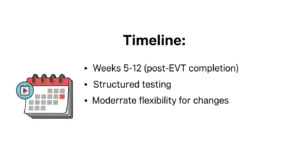
While EVT focuses on proving that the prototype works as designed, DVT is about ensuring that the product is ready for the market and mass production. At this stage, any design flaws or usability issues that were not detected in EVT can be addressed before moving to PVT.
What is Production Validation Testing?
Once the product has passed EVT and DVT, it moves to PVT, or Production Validation Testing. This is the final stage before full-scale manufacturing. PVT ensures that the product can be produced consistently in large quantities without defects. It focuses on validating the production process itself, testing the product under actual manufacturing conditions.
During PVT, manufacturers perform stress tests, quality assurance checks, and durability evaluations to confirm that the product can withstand the rigors of mass production. This stage also involves ensuring that the supply chain can meet the demands of large-scale production.
Collaboration with Suppliers During PVT
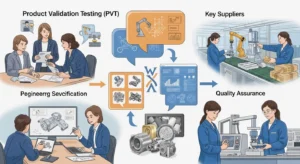
Collaboration with suppliers is crucial during PVT to ensure that all materials, parts, and components meet the required quality standards. This stage also focuses on identifying any potential bottlenecks in the production process that could delay the launch.
How EVT DVT Product Testing Fits into the Product Lifecycle
The progression from EVT to DVT to PVT is a natural flow in the product development lifecycle. Each stage has a specific role to play in ensuring the product is ready for the market.
-
EVT verifies that the prototype functions as intended.
-
DVT ensures that the design is manufacturable and meets all user and regulatory requirements.
-
PVT confirms that the product can be produced at scale without issues.
This structured testing process is essential for reducing risks, preventing product defects, and ensuring a successful product launch.
Key Differences Between EVT DVT Product Testing
Understanding the distinctions between EVT DVT Product Testing is important for engineers, product managers, and manufacturers. While all three stages aim to ensure product success, they focus on different aspects:
-
EVT: Focuses on validating the core functionality and design feasibility of the prototype.
-
DVT: Ensures that the design is scalable, manufacturable, and meets user expectations.
-
PVT: Validates the production process and confirms that the product can be produced consistently at scale.
By completing these phases, companies ensure that their product is ready for the market and free of design or production flaws.
Common Challenges in EVT DVT Product Testing
Each stage of EVT DVT Product Testing comes with its own set of challenges. During EVT, the biggest hurdle is often detecting design flaws that weren’t evident in earlier testing. In DVT, manufacturers may face difficulties balancing design changes with the ability to produce the product efficiently. Lastly, PVT often faces challenges with supply chain management and production consistency.
Managing Delays and Budget Overruns in EVT DVT Product Testing
Delays and unexpected costs can arise during any of the stages, but with proper project management, these challenges can be mitigated. Regular communication between engineering, design, and production teams can help avoid roadblocks and keep the process moving smoothly.
Best Practices for EVT DVT Product Testing
To maximize the success of each testing phase, follow these best practices:
-
EVT: Focus on quick prototyping and early testing to catch design flaws fast.
-
DVT: Ensure thorough stakeholder involvement and compliance with industry standards.
-
PVT: Collaborate with suppliers to ensure smooth scaling and identify potential production issues early.
By adhering to these best practices, teams can ensure their products pass through each stage successfully and are ready for mass production.
Technologies and Tools for EVT DVT Product Testing
Advancements in technology have made the testing process more efficient. Tools such as simulation software, 3D printing, and automated testing systems are increasingly used in EVT, DVT, and PVT to speed up the validation process. These technologies help engineers and manufacturers simulate real-world conditions and make adjustments before conducting physical tests.
The Future of Product Testing: AI and Machine Learning
As artificial intelligence and machine learning continue to evolve, they are beginning to play a larger role in EVT DVT Product Testing. AI can analyze test results, identify potential failures, and optimize testing processes, making the overall product validation process faster and more efficient.
Conclusion:
In conclusion, EVT DVT Product Testing is an essential part of the product development process. These testing phases help ensure that a product is functional, manufacturable, and ready for market success. By understanding the roles of EVT, DVT, and PVT, companies can streamline their development processes, avoid costly mistakes, and bring a high-quality product to market. Proper validation testing is the key to achieving product success and ensuring customer satisfaction.







Post Comment