GBH vs ABH: Understanding the Legal Differences
Introduction
Understanding the difference between GBH vs ABH is crucial in criminal law. These two assault charges differ significantly in severity, legal consequences, and penalties. This article explains the key differences, offering clarity on what constitutes each offence and how the law treats them.
If you are facing charges or seeking to understand these terms, this article will provide valuable insights into GBH and ABH. Knowing the distinction between them can impact your case or the way you approach criminal law.
Legal Definitions of ABH and GBH
To begin with, it’s important to understand the legal definitions of ABH and GBH. Both terms involve physical harm but differ in the level of injury and consequences.
-
ABH (Actual Bodily Harm) refers to any injury beyond minor discomfort. It includes injuries such as bruises, cuts, or scratches that heal quickly. While these injuries may not be life-threatening, they still lead to criminal charges.
-
GBH (Grievous Bodily Harm) refers to serious injuries that cause long-term damage or suffering. These could include broken bones, severe cuts, or permanent scarring. Victims of GBH often require medical attention and may suffer lasting physical or psychological effects.
By understanding the differences in the GBH vs ABH classifications, you can better comprehend the legal processes that follow.
Severity of Harm: ABH vs GBH
The main difference between ABH and GBH lies in the severity of harm caused to the victim. The law treats more severe injuries more harshly.
-
What Makes GBH More Serious? GBH involves injuries that leave lasting effects. Examples include deep lacerations, broken bones, or injuries that lead to long-term complications. The victim often experiences a permanent impact, which increases the seriousness of the charge.
-
Medical Perspectives on GBH: Medical professionals play a key role in assessing the injury’s severity. For GBH cases, doctors determine the long-term effects of the injury. This is important in establishing whether the injury qualifies as GBH or if it should be classified as ABH.
-
Psychological Harm in GBH: GBH can also include psychological harm. Emotional distress caused by severe violence may be considered when determining the charge. In contrast, ABH usually involves only physical injuries.
Legal Context & Criminal Charges
The law distinguishes ABH and GBH based on the severity of the injury and the intent behind the act.
-
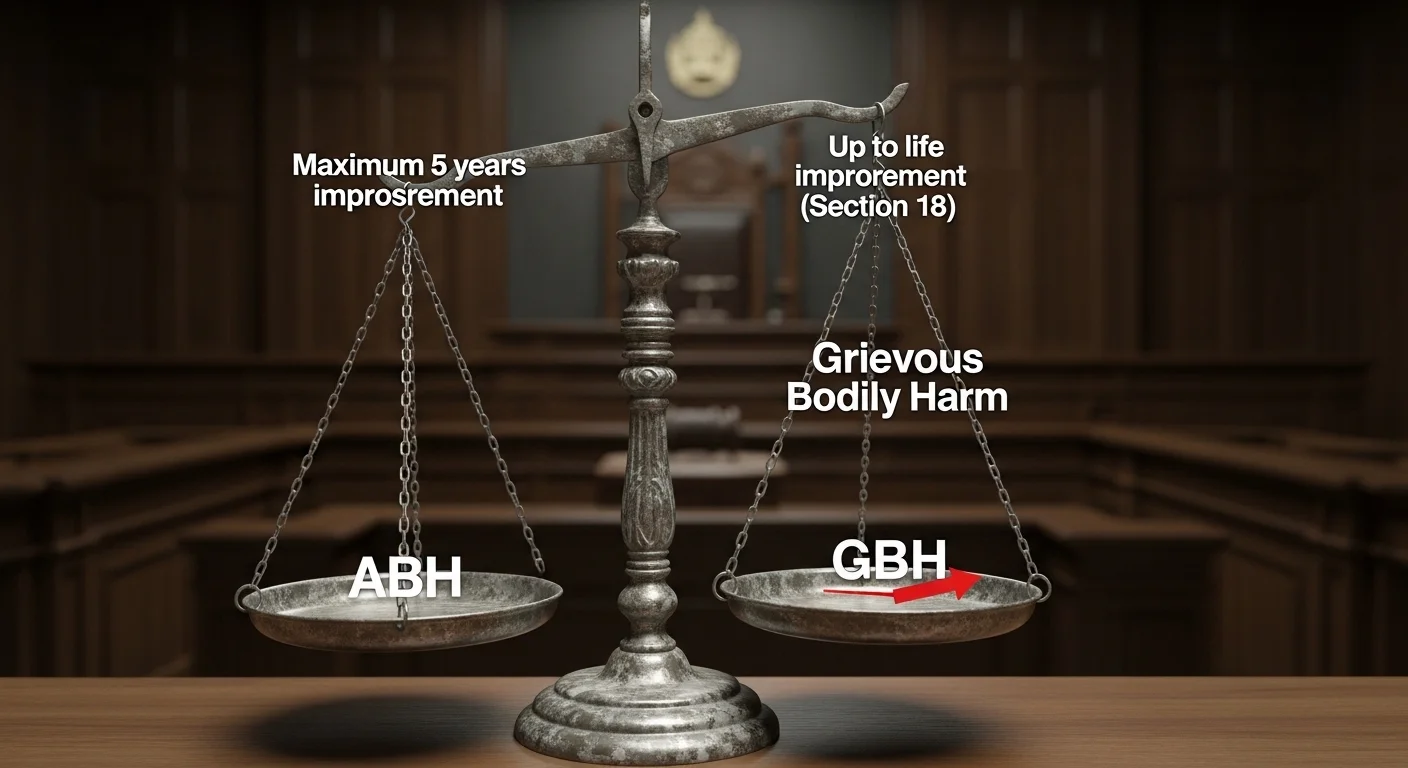
ABH Charges: In the UK, ABH is typically prosecuted under the Offences Against the Person Act 1861. It carries a maximum sentence of five years in prison, depending on the nature of the injury and the circumstances surrounding the offence.
-
GBH Charges: GBH is more serious, and the law treats it accordingly. Under Section 20 of the same Act, the penalty for GBH can be up to five years. However, if the injury was inflicted with intent, the charge becomes more severe, with a possible sentence of life imprisonment under Section 18.
The legal system places a greater emphasis on GBH because it involves more significant harm to the victim.
Common Defences for ABH and GBH Charges
There are several defences available for both ABH and GBH charges. A few common ones include:
-
Self-Defence: If the defendant can prove they acted in self-defence, they may be acquitted of the charges. The law allows individuals to protect themselves from harm, and this can apply to both ABH and GBH charges.
-
Accident: In some cases, the injury may have resulted from an accident. If the defendant can prove they did not intend to cause harm, they may be able to argue that the injury was not intentional.
-
Lack of Intent: For GBH, proving the lack of intent is a valid defence. If the defendant did not mean to cause serious harm, the charge may be reduced from GBH to ABH.
The availability of these defences can significantly impact the outcome of a case.
Penalties for ABH and GBH
The penalties for ABH vs GBH vary widely. The legal system imposes more severe penalties for GBH due to the serious nature of the injuries involved.
-
ABH Penalties: The maximum penalty for ABH is five years in prison. However, in many cases, the court may impose a lesser sentence, depending on the severity of the injury and the defendant’s criminal history.
-
GBH Penalties: GBH penalties depend on the severity of the injury and the intent behind the crime. For Section 20 GBH, the penalty can be up to five years in prison. If convicted under Section 18, the defendant could face life imprisonment.
The consequences of GBH vs ABH are starkly different, and the penalties reflect the level of harm inflicted on the victim.
Real-World Examples of ABH and GBH Cases
Understanding the differences between ABH vs GBH is easier when we look at real-world examples.
-
ABH Example: A person punches another in a heated argument, causing a bruise or a small cut. This would likely be considered ABH, as the injury is temporary and does not cause long-term harm.
-
GBH Example: A person stabs another, causing a deep wound that requires stitches and leads to permanent scarring. This is GBH, as the injury is severe and may have lasting consequences.
These examples help clarify how the law differentiates between ABH vs GBH.
Differences in GBH Sentencing and Legal Process
Sentencing for GBH vs ABH involves several factors. Courts look at the severity of the injury, the intent of the defendant, and any aggravating circumstances.
-
GBH with Intent: If the defendant intended to cause harm, the courts treat the case more severely. In such cases, the sentencing can be much harsher, with possible life imprisonment for GBH with intent.
-
Section 18 vs Section 20 GBH: The intent behind the injury plays a significant role in determining the charge. Section 20 GBH involves harm inflicted recklessly, while Section 18 GBH involves intentional harm. This distinction is crucial in determining the sentence.
Conclusion
In conclusion, understanding the difference between GBH vs ABH is critical for anyone involved in criminal law, whether they are accused of the crime or defending someone else. GBH is a much more serious offence, with more severe penalties and consequences. On the other hand, ABH charges involve less severe injuries but still carry significant legal ramifications. By understanding these differences, you can better navigate the legal process and make informed decisions.









Post Comment