Federated Identity Manager Guide for Beginners

A federated identity manager is a system that allows users to access multiple applications or services using a single set of login credentials. Instead of creating separate accounts for every platform, users can rely on a trusted identity provider to verify their identity.
This concept is part of federated identity management, where identity information is shared securely across different domains. For example, when you log into a website using your Google account, you are using identity federation in action. In simple terms, a federated identity manager helps reduce the need for multiple passwords while improving user convenience and security.
How Federated Identity Management Works Step by Step
To understand how federated identity management works, it is important to know the key players involved. First, the user tries to access a service such as a web application. This service is called the service provider. Instead of asking for login details directly, it redirects the user to an identity provider.
The identity provider authenticates the user using credentials such as email and password. Once verified, it sends a secure token back to the service provider. This token confirms the user’s identity without sharing sensitive information. Protocols like SAML, OAuth, and OpenID Connect are commonly used in this process. These authentication protocols ensure secure communication between systems.
Key Components of Federated Identity Systems
A strong federated identity management system relies on several important components. The identity provider is responsible for verifying user identity. The service provider delivers the application or service that the user wants to access. Trust relationships connect these systems and allow them to share identity data securely.
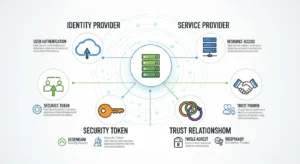
Security tokens play a major role in federated authentication. They act as proof that a user has been successfully authenticated. Understanding these components makes it easier to see how a federated identity manager simplifies secure login processes across multiple platforms.
Key Features of a Federated Identity Manager
A federated identity manager offers several features that improve both security and user experience. Single sign-on allows users to log in once and access multiple services without repeating the login process. Centralized authentication ensures that identity verification happens through a trusted source.
It also supports cross-domain access, which means users can move between different systems seamlessly. Another key feature is user identity verification, which ensures that only authorized users gain access. These features make identity access management systems more efficient and secure.
Benefits of Federated Identity Management
Federated identity management provides multiple benefits for both users and organizations. Users enjoy a smoother experience because they do not need to remember multiple passwords. This reduces password fatigue and improves productivity.
From a security perspective, centralized authentication reduces the risk of weak or reused passwords. Organizations can also scale their systems easily, making this solution ideal for enterprises and cloud environments. Overall, a federated identity manager enhances both usability and security in modern digital systems.
Real World Examples of Federated Identity
One of the most common federated identity management examples is logging into apps using Google or Microsoft accounts. These platforms act as identity providers and allow users to access multiple services with a single login.

Many enterprise systems also use identity federation to connect employees with internal tools and external applications. This approach is widely used in cloud computing and SaaS platforms. These real-world examples show how federated identity works in everyday digital interactions.
Federated Identity vs SSO vs OAuth
It is important to understand the difference between federated identity and similar concepts. Single sign-on focuses on allowing users to access multiple applications within the same organization using one login. Federated identity goes further by enabling access across different organizations or domains.
OAuth is an authorization framework that allows applications to access user data without sharing passwords. While it is used in federated authentication, it is not the same as identity federation. Understanding these differences helps businesses choose the right identity management system.
Best Federated Identity Manager Tools
There are several tools available that act as a federated identity manager for businesses. Popular options include Okta, Azure Active Directory, Auth0, and AWS identity federation services. These platforms provide advanced features such as multi-factor authentication, secure login systems, and identity governance. Choosing the right federated identity solution depends on business needs, scalability, and integration requirements.
Federated Identity in Cloud Computing
Federated identity management plays a critical role in cloud computing. It allows users to access multiple cloud-based applications using a single identity. This is especially useful for remote teams and organizations that rely on SaaS tools. It improves user access security while maintaining a seamless login experience. Cloud identity management solutions often use identity federation to connect users across different platforms securely.
Security Risks and Challenges of Federated Identity
Despite its advantages, federated identity management comes with certain risks. If a token is compromised, unauthorized users may gain access to multiple services. Misconfigured trust relationships can also create vulnerabilities. Another challenge is dependency on the identity provider. If the provider fails, users may lose access to connected systems. Organizations must implement proper security measures to reduce these risks.

Federated Identity and Zero Trust Security
Zero-trust security is a modern approach where no user or system is trusted by default. Federated identity management supports this model by ensuring strict identity verification. Each access request is validated before granting permission. This improves overall security and protects sensitive data. By combining zero trust principles with a federated identity manager, organizations can build stronger and more secure systems.
When Should You Use a Federated Identity Manager?
A federated identity manager is ideal for organizations that use multiple applications or operate across different domains. It is especially useful for enterprises, SaaS platforms, and businesses with remote teams. It simplifies user access while maintaining strong security controls. If your organization wants to improve user experience and reduce password-related issues, implementing identity federation is a smart choice.
Future Trends in Identity Management
The future of identity management is evolving rapidly. Technologies like passwordless authentication and AI-based security are becoming more common. Decentralized identity systems are also gaining attention, allowing users to control their own identity data. As digital systems grow, federated identity management will continue to play a key role in secure and efficient authentication.
Conclusion
A federated identity manager is an essential tool in today’s digital landscape. It simplifies login processes, enhances security, and supports modern technologies like cloud computing and zero trust.
By understanding how federated identity management works and choosing the right tools, businesses can create a secure and seamless user experience.









Post Comment