How to Start a Cleaning Business: A UK Guide to Setting Up and Finding Clients
How to start a cleaning business in the UK begins with a simple idea. People pay for a clean home or workplace. You can supply that service with little more than time, effort and basic equipment. This guide walks you through each step, from choosing your services to finding your first clients.
You do not need a shop, a van or a big loan to begin. Many cleaners start part-time and grow from there. This guide is general information only, not financial or legal advice. Check GOV.UK guidance and get free advice before you act.
How to start a cleaning business: what the work looks like
A cleaning business sells time and trust. Clients let you into their homes. Reliability matters as much as clean floors. Turn up on time, clean well, and keep their keys and details safe.
The work suits people who like practical jobs and steady routines. Most days follow a set round: you visit the same homes or offices each week and clean them. One-off jobs break the pattern, such as a deep clean before a move.
You also run the business side: quotes, bookings, supplies, records and late payments. Plan for both halves before you start.
Choose your services and your area
First, pick services you can do well, and start narrow. You can add more later, once your round is full.
Domestic cleaning
Domestic cleaning covers regular home cleans, usually once a week or once a fortnight. You dust, vacuum, clean kitchens and bathrooms, and change beds if the client asks. One-off deep cleans pay more and often lead to regular work. Keep your list short at the start.
Commercial cleaning
Commercial cleaning covers offices, shops and small business premises, often outside working hours. Jobs run bigger than home cleans, and clients usually sign contracts. The work brings steadier income, but also more rules: keys, alarms, and cleaning around staff.
Specialist work — end-of-tenancy, carpet, window and oven cleans — needs extra kit or training and commands higher prices. Leave it until the basics run well.
Overall, work close to home at first. Travel eats time and fuel, and a tight round fits more jobs into each day.
How to start a cleaning business step by step
Two decisions come first: your business structure, then your registration.
Pick your structure: sole trader or limited company
Most people start as a sole trader — the simplest structure to set up and keep records for. You work for yourself and make all the decisions. The tax system classes you as self-employed, and you keep all the profits after tax. The trade-off is unlimited liability: you are personally responsible for all the debts of the business. GOV.UK’s guide to setting up a business sets out both structures side by side.
A limited company is a separate legal entity from you. You register it with Companies House before you start trading, and the company pays Corporation Tax on its profits. It limits your personal risk. But it brings more paperwork: company accounts, a company tax return, and your own tax return too. Most cleaners start as sole traders and switch later. GOV.UK notes that moving from sole trader to limited company is usually the easier direction.
Register with HMRC
In fact, you can start trading straight away without registering. You must register for Self Assessment as a sole trader if you earn more than £1,000 in a tax year. The tax year runs from 6 April to 5 April. Register by 5 October after the end of the tax year you started trading. For example, start any time between 6 April 2026 and 5 April 2027. You must register by 5 October 2027. Register late, and you could face a penalty.
HMRC gives you a Unique Taxpayer Reference, known as a UTR, when you register. You need a National Insurance number to register. After that, you file a Self Assessment tax return each year. Send your online return and pay the tax due by 31 January after the tax year ends. Or send the paper return by 31 October. Keep records from the day you start trading, so you can work out your profit or loss.
By contrast, a limited company follows a different path. Register the company with Companies House first, then register for Corporation Tax within three months of starting business activity. You must also register for VAT if your taxable turnover goes over £90,000 in a rolling 12 months. The threshold has applied since 1 April 2024. You can also hold a job while you run the business.
How to start a cleaning business with little money
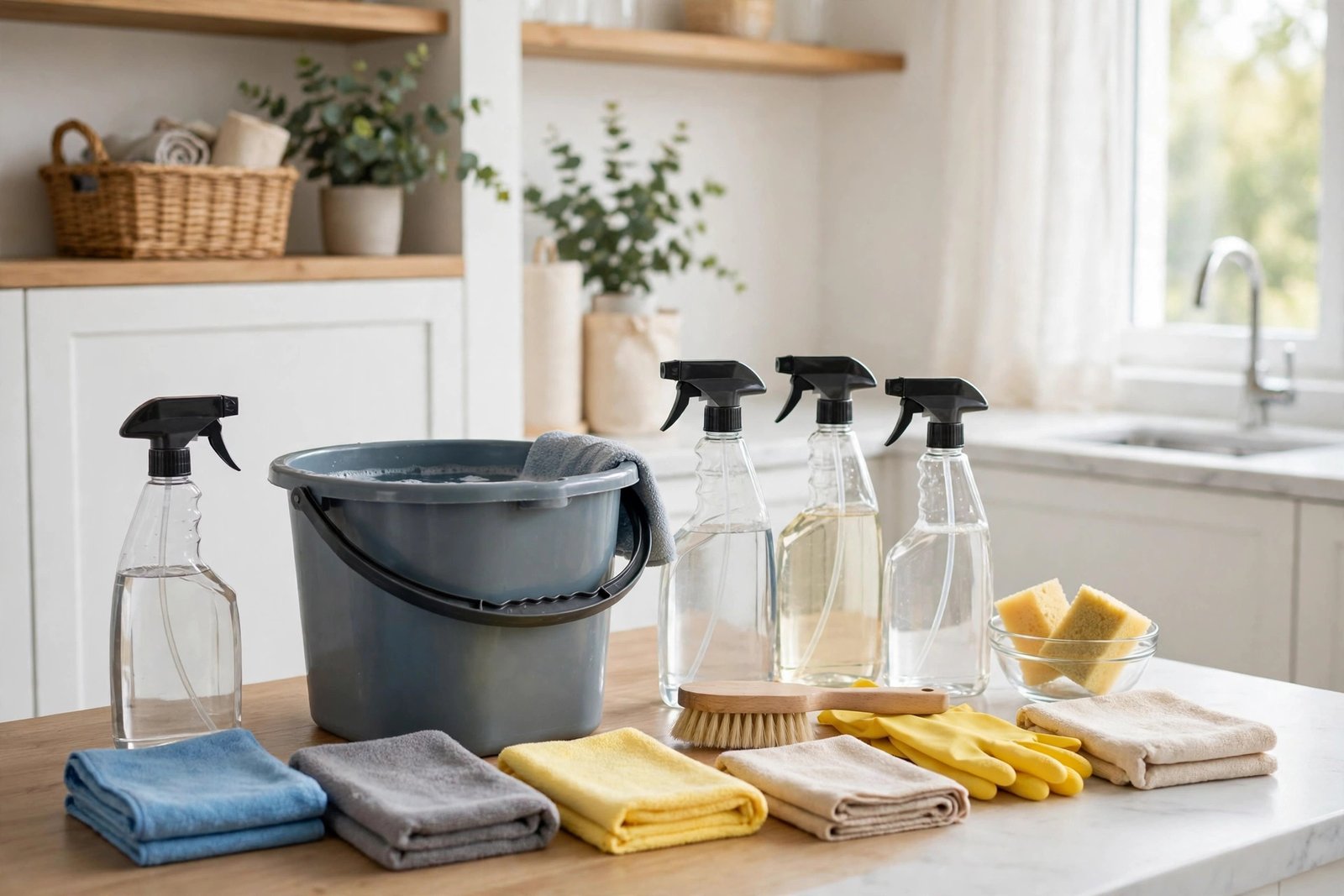
In general, cleaning needs little kit: cloths, sprays, a mop, a bucket and a vacuum cover most home cleans. Start with what you already own, and buy more as you earn. Work from home — you need no shop or office.
Start part-time if you already have a job: evening or weekend cleans build your round without risking your income. Avoid loans at the start. Borrowed money adds pressure before you have any clients. Cleaning earns its keep from your time, not from expensive kit.
Skip franchises too, unless you fully understand the fees. A franchise sells you a brand and a system, but it takes a cut of your earnings. Most cleaners build their own round for far less. Start small, grow from your own earnings, and you will learn how to start a cleaning business without debt.
Work out your costs and prices: how to start a cleaning business without overspending
First, list every cost before you set a price: supplies, travel, insurance, phone and marketing all count. A price that ignores them leaves you working for nothing.
Next, price by the hour or by the job. Check what cleaners charge in your area before you set your rates. Your price must cover your costs, your time and your tax. Do not undercut yourself to win work. Cheap prices attract clients who haggle and complain.
Quote clearly, in writing, before you start: what the clean includes, how long it takes, and what it costs. Quote extra work separately, so clear quotes prevent arguments and protect your time.
Find your first clients
First, start with people you already know: tell friends, family and neighbours that you clean, and ask them to pass your name on. Word of mouth brings the best clients, because a recommendation carries trust. Ask happy clients to tell others if they liked your work.
Use free channels first: a free Google Business Profile, so local searches find you, and local community groups online. Put a simple leaflet through doors in streets you want to work in. Keep the message short: what you clean, where you work, and how to reach you.
Ask happy clients for reviews, and reply to every message fast. People often contact three cleaners and hire the first to answer. Finally, turn up on time and clean well: your work is your best advert.
How to start a cleaning business and stay on top of tax
First, put money aside from every payment you receive, because tax is part of how to start a cleaning business properly. Tax falls due once a year, and a lump sum hurts if you spent it all. Open a separate bank account for the business, and move the tax money across at once. A separate account also keeps your records clean, and a limited company must keep its money apart from yours.
Next, keep records from day one: each job, each payment and each cost, with dates and client names. Keep them for at least five years after the 31 January deadline they relate to. Good records make your tax return simple and prove your income if HMRC ever asks.
In addition, money you set aside can earn interest while it waits — our guide explains how interest builds over time. Do not spend the pot: treat it as money that already belongs to HMRC.
How to start a cleaning business without the usual mistakes
First, many new cleaners skip the registration deadlines: they earn over £1,000, forget the 5 October date, and face a penalty. Mark the date in your diary the day you start trading. It is the easiest deadline to miss when you learn how to start a cleaning business.
Second, many price too low. A low price wins jobs fast, but it leaves no room for tax, travel or a quiet week.
Third, some cleaners work without insurance. The law does not require public liability insurance for cleaners. But many cleaners hold it, because one accident can cost far more than the cover. Get a quote before your first job.
Fourth, some take every job that comes. A client far away costs you time. So does a job you cannot do well, or a client who haggles over every pound. Say no to the wrong jobs, and keep your round tight.
Fifth, some mix business money with personal money. Records turn into a mess, and the tax return becomes a chore. A separate account fixes that. Finally, some cleaners never ask for reviews. Reviews bring new clients for free.
General-education note: This article is general information only. It is not financial or legal advice. Rules, rates and thresholds can change. Check GOV.UK guidance and get free advice from Citizens Advice or an accountant before you act.
FAQs about how to start a cleaning business
Do I need a licence to start a cleaning business?
No single licence covers cleaning work in the UK. Check GOV.UK’s licence finder for your area before you start.
How much money do I need to start?
No set figure applies, because cleaning needs little kit. Start with cloths, sprays, a mop, a bucket and a vacuum you already own. Your time is your main investment, not your money.
Should I be a sole trader or a limited company?
Most cleaners start as sole traders: the setup is simple, and you keep all the profits after tax. A limited company limits your personal risk, but it brings more paperwork. You can switch later, and moving from sole trader to limited company is usually the easier direction.
Do I need insurance?
The law does not require public liability insurance for cleaners. But many cleaners hold it: one accident can cost far more than the cover. If you take on staff, you must register as an employer with HMRC and set up PAYE.
How do I find my first clients?
Start with people you know, and ask them to pass your name on. Set up a free Google Business Profile, join local community groups, and put simple leaflets through doors in your area. Ask happy clients for reviews, and reply to every message fast.






Post Comment