ETS 2.0: A Complete Guide for Businesses and Households
Introduction
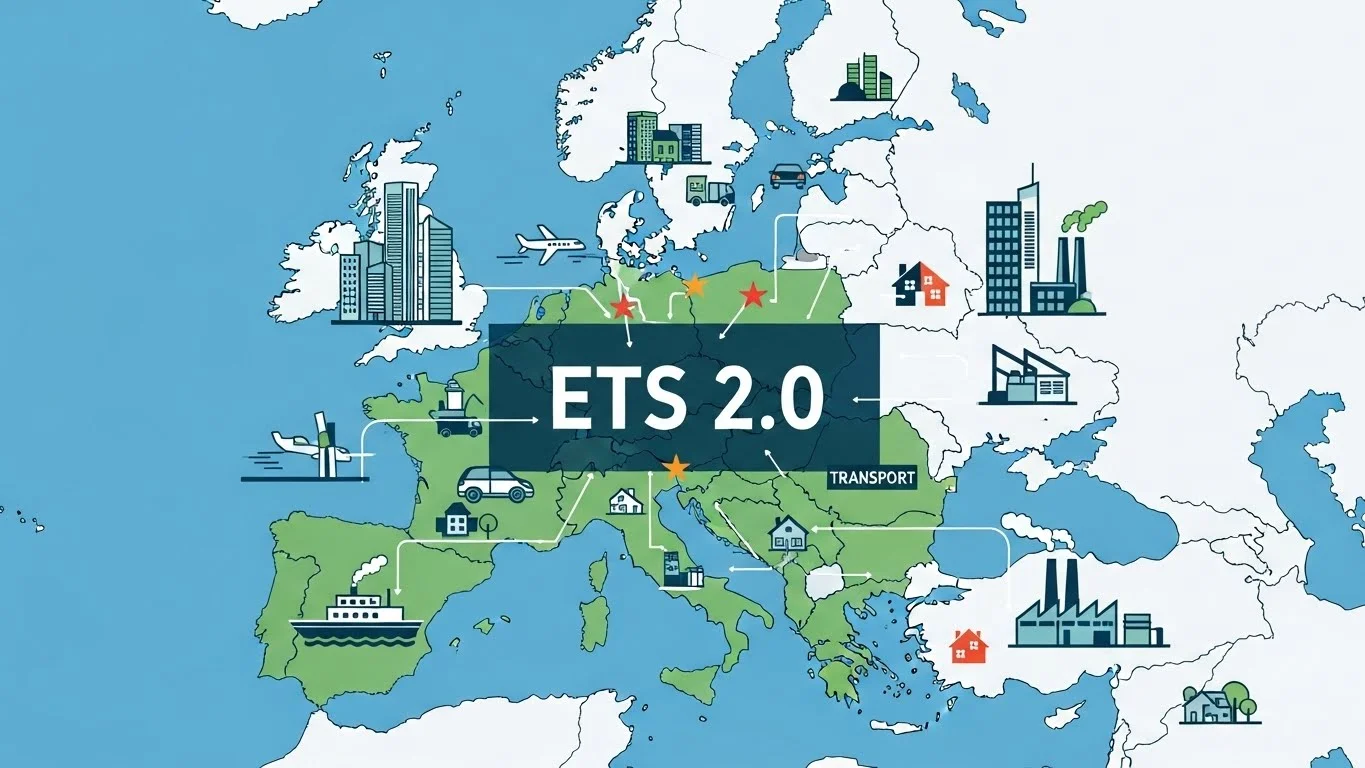
ETS 2.0 is the European Union’s updated emissions trading framework, designed to reduce carbon emissions across multiple sectors. This system extends coverage to areas previously outside the original EU ETS, such as buildings, road transport, and fuel suppliers. Understanding this updated carbon market is crucial for businesses and households, as it affects energy costs, compliance obligations, and long-term climate planning. Comparing ETS 2.0 with the original EU ETS highlights the EU’s approach to achieving its Fit for 55 climate targets and working toward carbon neutrality by 2050.
Scope and Coverage
The updated emissions trading system covers key sectors including the built environment, road transport, and fuel suppliers. Buildings now fall under monitoring obligations, meaning heating fuels and energy usage in homes and commercial buildings contribute to the system. Road transport emissions are included primarily through upstream regulations for fuel providers. Energy-intensive sectors such as logistics and construction also face significant implications. Awareness of these coverage details helps businesses plan efficiency measures and invest in renewable energy solutions.
How the System Works
At its core, ETS 2.0 operates on a cap-and-trade mechanism. Carbon allowances are issued to covered entities who must monitor, report, and surrender allowances based on their emissions. Allowances are allocated through auctions, creating a market for carbon credits. Monitoring obligations ensure accurate reporting, and businesses must adhere to deadlines to avoid penalties. By creating financial incentives for emission reductions, the system encourages companies to adopt cleaner energy sources and improve efficiency.
Economic Implications
One of the most notable aspects of the EU’s updated emissions trading system is its economic impact. Businesses face higher energy costs as carbon pricing passes through to fuel, heating, and electricity expenses. Households may experience moderate increases in energy bills, especially for heating and transport. Delays or adjustments to the system can influence European inflation. Sectors like logistics, construction, and energy-intensive industries are particularly sensitive to these changes. Companies can manage risk by monitoring carbon allowance pricing, anticipating scarcity, and exploring efficiency or renewable energy investments.
Household and Social Impacts
The updated carbon market also affects households indirectly through higher fuel prices. To address social consequences, the EU has created the Social Climate Fund, helping vulnerable populations manage energy costs and encouraging energy-efficient upgrades. Integration with renewable energy systems can further reduce household emissions and long-term expenses. Aligning individual behavior with EU climate goals ensures that both social and environmental objectives are met.

Regulatory Compliance
The system is grounded in frameworks such as EU Directive 2023/959. Businesses must understand compliance requirements to avoid penalties and ensure proper reporting. The directive outlines monitoring, reporting, and verification obligations, as well as rules for allowance allocation and auction participation. Fit for 55 climate targets reinforce the EU’s commitment to emission reductions, making this system a critical policy tool. Comparing the new framework with EU ETS1 highlights expanded coverage and strengthened accountability.
Strategic Preparation for Businesses
To manage the updated emissions trading system effectively, businesses should adopt proactive strategies. Cost-saving measures include increasing energy efficiency, investing in renewable energy, and optimizing operations to reduce emissions. Allowance scarcity and market volatility present risks, but careful planning can mitigate exposure. Monitoring allowance pricing and forecasting market trends helps make informed decisions. Long-term planning should incorporate both compliance obligations and sustainability objectives, positioning businesses to thrive while contributing to climate neutrality.
Future Trends and Insights
ETS 2.0 marks a significant step in the EU’s climate policy. Market evolution and policy updates are expected over the coming years, influencing energy markets and investment decisions. Globally, the EU’s updated carbon market serves as a model for other regions considering cap-and-trade systems. Businesses and households must stay informed, adapting strategies to align with environmental and economic goals. Effective participation ensures reduced emissions, cost management, and alignment with renewable energy adoption.
FAQs
How does ETS 2.0 differ from EU ETS1?
The updated system expands coverage to buildings, road transport, and fuel suppliers, while EU ETS1 focused primarily on large industrial emitters and power generation.
What are the compliance deadlines?
Monitoring begins in 2025, with full compliance expected by 2027 or 2028 depending on sector and member state regulations.
How can businesses reduce costs?
Investing in energy efficiency, renewable energy, and careful allowance management helps minimize exposure to carbon costs.
Conclusion
The EU’s updated emissions trading system represents a major evolution in carbon policy. Its effects extend to businesses, households, and the broader economy, influencing energy costs, compliance obligations, and long-term sustainability planning. By understanding the system, preparing for regulatory requirements, and adopting efficiency and renewable strategies, both businesses and households can navigate it effectively while contributing to Europe’s climate goals. ETS 2.0 is not just a policy mechanism; it is a roadmap for a low-carbon future.








Post Comment